Learn the trick
Front nails, back nails and dew claws — a map
Watch a dog dig and you’ll notice something useful: it’s all front paws. That single fact decides which tool belongs to which nail, and it’s why the scratch corner holds two shapes instead of one.
Front nails — the self-service ones
Front nails are the ones that click on hard floors first, and happily they’re also the ones your dog can file solo. The Nail File Toy turns every treat raid into a filing session; a standing scratch board at 60–80 degrees does the same in guided lessons. Most dogs keep their own fronts short once either habit sticks.
Back nails — the ones digging never touches
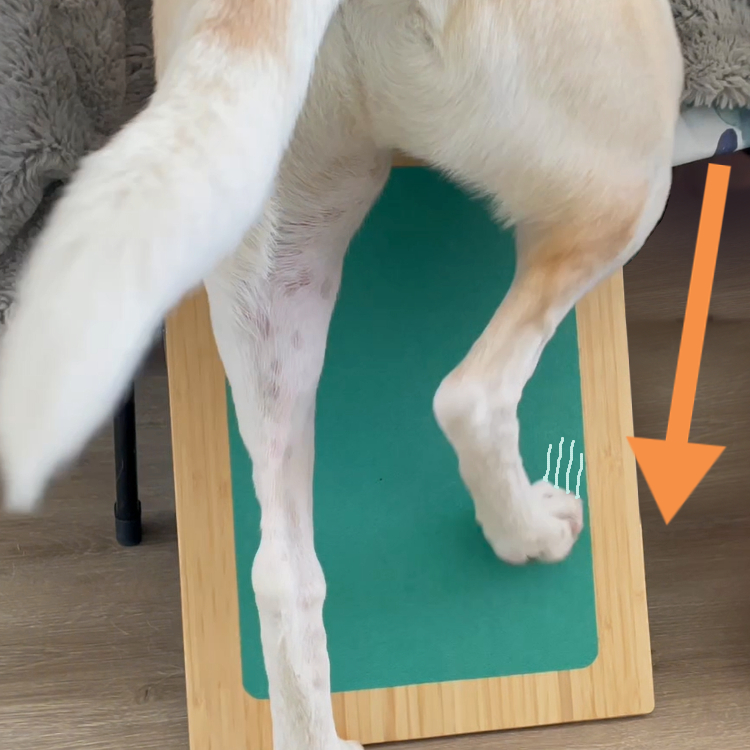
Rear paws push; they don’t scrape. Left alone, back nails only wear down on pavement walks, so indoor dogs and light walkers grow long ones. Hold the Scratch Board low behind your dog or flat against a step and reward a backward kick-scrape — the 60-grit face makes short work of them, and a session or two a week keeps up.
Dew claws — the ones nothing touches
The dew claw rides up on the leg and never meets the ground, which is why overgrown dew claws are the ones that curl. Tilt the board against the inside of the front leg and reward a sideways drag of the paw; the store’s own dew-claw hold takes a few tries and then becomes routine. If a dew claw has already curled toward the skin, have a groomer or vet take the tip first — boards maintain length, they don’t rescue it.
The weekly rhythm
Fronts: the toy runs itself, just keep the treat drawer stocked. Backs: two short board sessions a week. Dew claws: a dozen sideways drags whenever you’re already down on the floor. Ten minutes of total effort, and every click on the kitchen tile fades out on its own.
Ready to put it to work?
